
1. A New Industry Landscape: From Scale Expansion to Quality Excellence
The steel industry is undergoing profound transformation. The fundamental supply-demand imbalance in the specialty steel sector persists, with oversupply remaining a defining characteristic. The industry's shift from extensive scale expansion to high-quality development has become the essential path forward. Following the trajectory of "ordinary steel to premium, premium to specialty, specialty to precision," specialty steel enterprises must differentiate through quality.
2. Non-Metallic Inclusions: The Key Constraint on Quality
Non-metallic inclusions are the primary factor limiting the quality and performance of specialty steels. These inclusions — oxides, sulfides, silicates, and other non-metallic compounds — form during steelmaking and persist into the final product. Their size, composition, quantity, and distribution directly affect fatigue life, toughness, corrosion resistance, and surface quality.
For specialty steel producers striving to move up the value chain, precise characterization and control of non-metallic inclusions is the critical technological differentiator. Traditional manual microscopy methods cannot provide the statistical robustness or compositional data needed for meaningful process optimization.
3. The Automated SEM-EDS Revolution
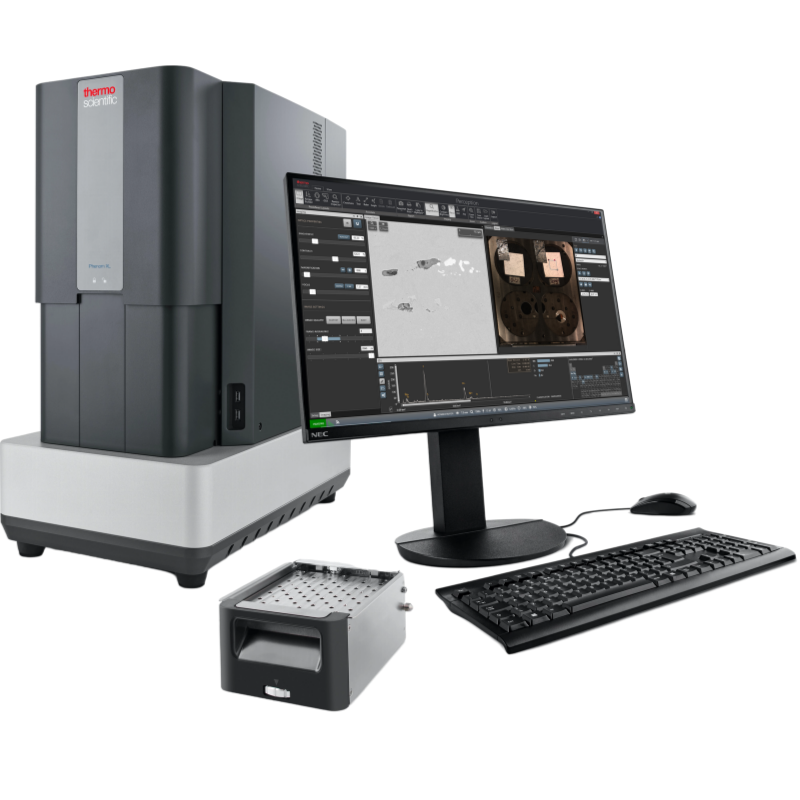
Automated SEM-EDS inclusion analysis, as embodied in the ParticleX Steel system, represents a paradigm shift in inclusion characterization:
- Comprehensive Detection: Tens to hundreds of thousands of inclusions automatically detected and analyzed per sample, providing statistically significant datasets.
- Compositional Classification: Each inclusion is classified by elemental composition — sulfides, aluminates, silicates, globular oxides, and complex inclusions — enabling differentiation that optical methods cannot achieve.
- Process Correlation: The detailed compositional and morphological data enables correlation of inclusion populations with specific process conditions, guiding targeted optimization.
- Quality Certification: Standardized, automated analysis provides the objective data needed for quality certification to international standards and customer specifications.
For specialty steel enterprises, adopting automated inclusion analysis is not merely a laboratory upgrade — it is a strategic investment in quality capability that directly supports the transition from commodity producer to premium supplier.