
The Impact of Metal Contaminants on Lithium Battery Safety
The content of metal contaminants (including iron, nickel, copper, zinc, chromium, etc.) in cathode materials of lithium-ion batteries has a significant impact on battery performance. During the battery formation stage, metal contaminants first oxidize at the cathode and then reduce at the anode. When the accumulated metallic elements at the anode reach a certain level, dendrites form, causing separator puncture, internal short circuits, increased self-discharge rates, and in severe cases, battery fire or explosion, compromising battery safety.
Current cleanliness control standards for metal contaminants have advanced from the earlier ppm (parts per million) level to the ppb (parts per billion) level. For lithium battery manufacturers, establishing a systematic metal contaminant detection and control scheme is critical for ensuring product quality and safety.
Limitations of Traditional Optical Microscopy Cleanliness Analysis
Traditional optical microscopy-based cleanliness analysis methods face several challenges when detecting metal contaminants in lithium battery materials:
1. Inability to distinguish metal from non-metal particles: Optical microscopy relies on morphology and grayscale contrast for particle identification. Metal particles and certain non-metal particles (such as ceramic fragments) may appear similar under an optical microscope, leading to misidentification.
2. No compositional information: Optical microscopy cannot provide elemental composition data, making it impossible to differentiate specific types of metal contaminants (e.g., iron, copper, zinc). This is a critical gap, since different metals originate from different sources in the production process.
3. Limited resolution for small particles: Optical microscopy has inherent resolution limitations, leading to potential miscounts of sub-micron and small micron-sized particles.
4. Subjectivity and operator dependence: Manual microscopy inspection is time-consuming and subject to operator judgment variability, affecting result consistency and reproducibility.
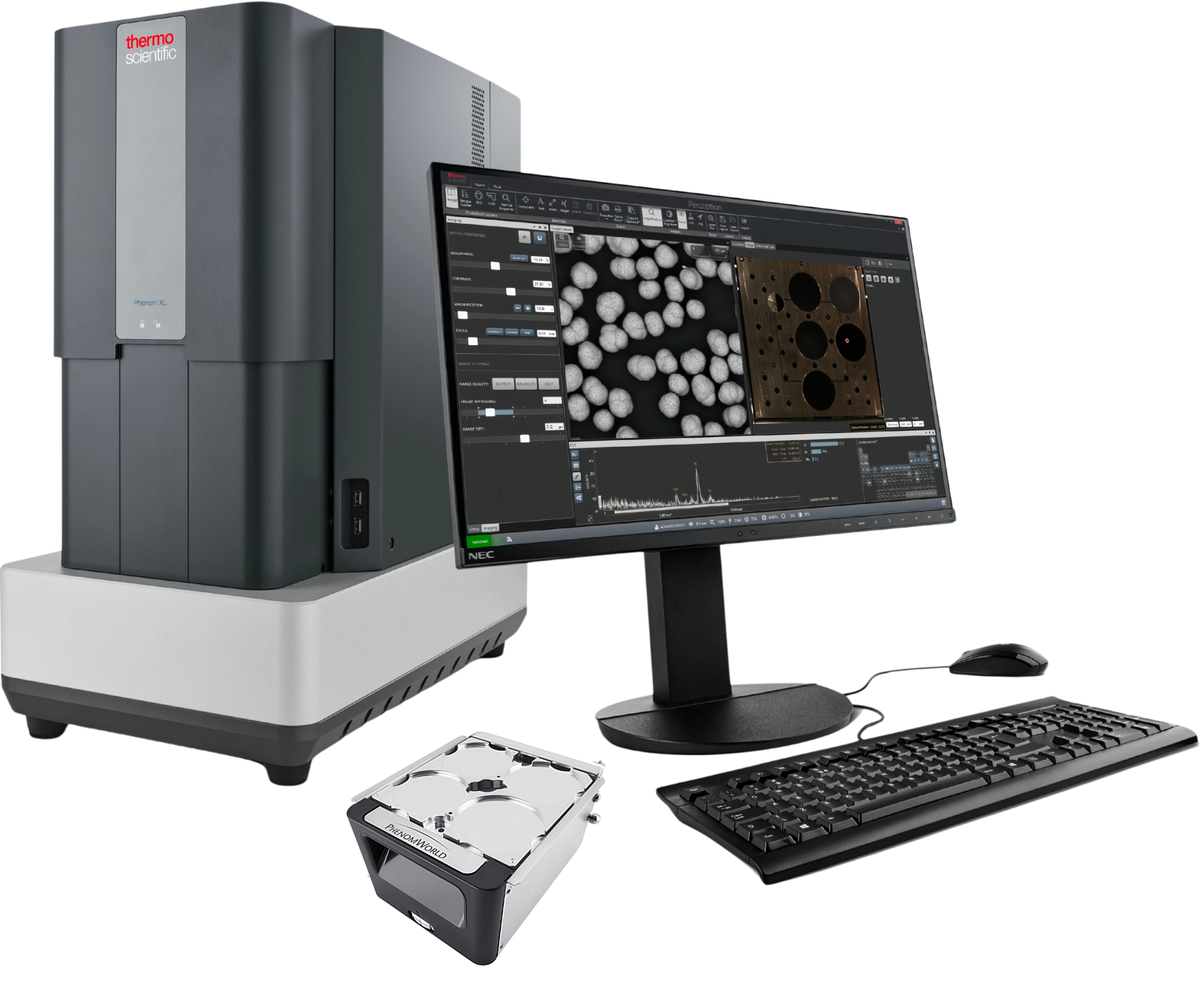
In Part 2 of this analysis, we will explore how automated SEM-EDS solutions address these limitations with integrated particle detection, classification, and compositional analysis capabilities.