
1. The Threat of Metal Contaminants to Lithium Battery Safety
Lithium iron phosphate (LFP) cathode material, with its excellent thermal stability, long cycle life, electrochemical stability, and environmental friendliness, has become one of the most promising cathode materials for power batteries. However, the introduction of metal impurities into LFP material can severely compromise battery life and safety.
Common metal contaminants include: iron (Fe), nickel (Ni), copper (Cu), zinc (Zn), chromium (Cr), and others. During the battery formation stage, these metal contaminants first oxidize at the cathode and then reduce at the anode. When accumulated metallic elements at the anode reach a critical level, dendrites form, causing separator puncture, internal short circuits, and potentially catastrophic battery failure.
2. Sources of Metal Contaminants in LFP Production
Metal contaminants in LFP materials originate from multiple sources throughout the production chain:
- Raw materials: Iron phosphate, lithium carbonate, and other precursors may contain trace metal impurities.
- Processing equipment: Wear and corrosion of mixing equipment, grinding media, pipes, and reactors can introduce metal particles.
- Environmental contamination: Airborne particles and facility-related debris may enter during material handling.
- Sintering process: Furnace components and atmosphere control can contribute to contamination.
3. Detection Methodology: SEM-EDS Automated Analysis
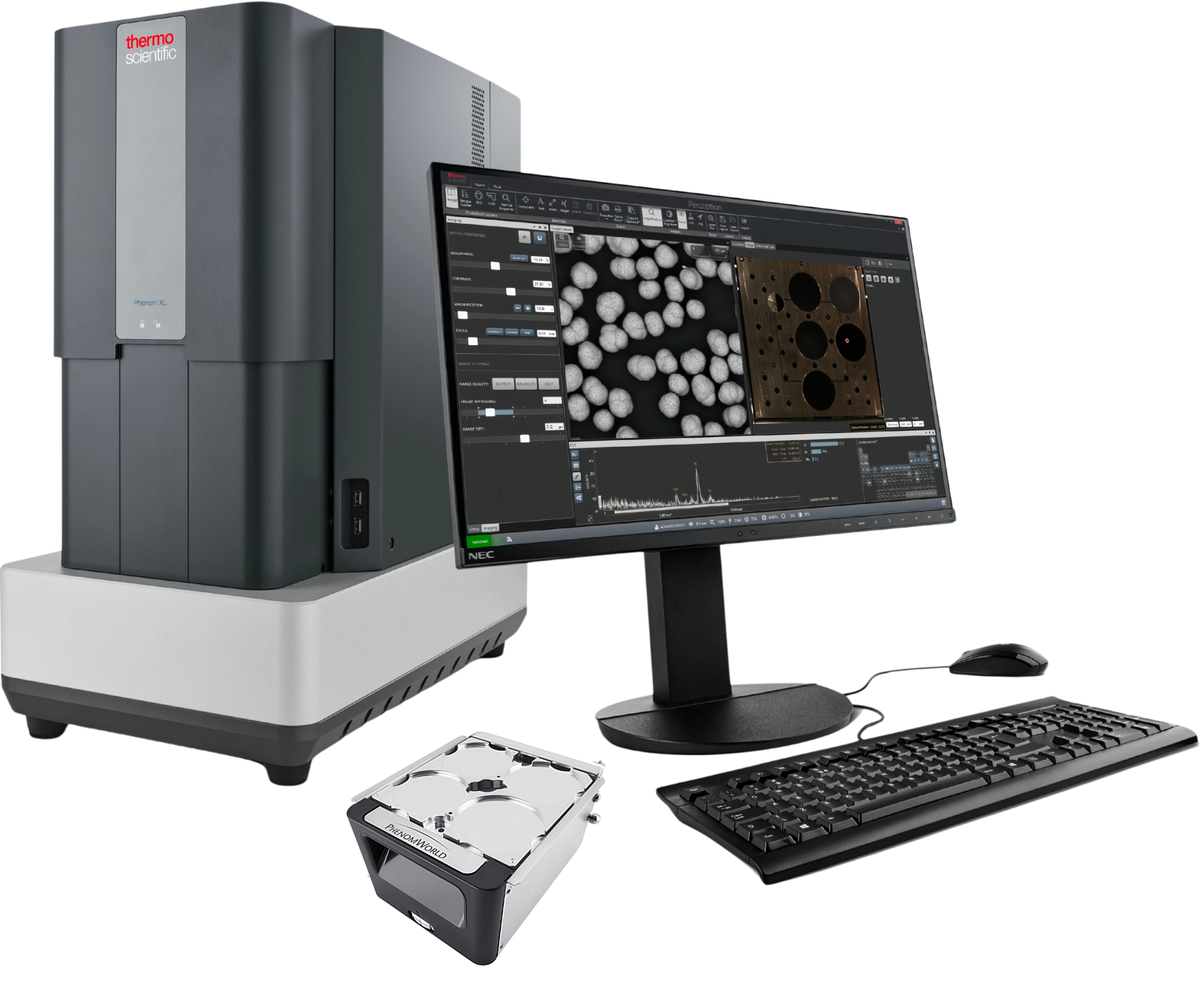
The ParticleX Battery system employs automated SEM-EDS to detect and analyze metal contaminants in LFP materials:
- Automated particle search at high speed identifies all potential contaminant particles on the sample.
- BSE imaging provides high-contrast detection of metal particles against the LFP matrix.
- EDS analysis determines the elemental composition of each detected particle, enabling clear classification by metal type.
- Statistical analysis provides quantitative data on the size distribution and concentration of each contaminant type.
4. Practical Significance
With the industry moving toward ppb-level cleanliness standards, systematic metal contaminant analysis using SEM-EDS has become essential for quality assurance in LFP production. The ability to not only count and size particles but also identify their elemental composition enables root-cause tracing of contamination sources and targeted process improvements — critical capabilities for meeting the stringent quality demands of the power battery market.