
The requirement for clean components in the automotive industry was first introduced by Robert Bosch GmbH in 1996 to improve the production quality of diesel engine common rail injection systems. During production, they discovered that small injector nozzles were easily clogged by residual contaminant particles, leading to the establishment of quality specifications for clean components — the origin of cleanliness testing standards.
In 2005, the German Association of the Automotive Industry (VDA) published VDA 19.1, which became the foundational standard for technical cleanliness inspection in the automotive industry, subsequently adopted internationally as ISO 16232.
The Critical Importance of Hard Particles
Not all contaminant particles pose equal risk. Hard particles — particularly those containing silica (SiO₂), alumina (Al₂O₃), and hard metal fragments — are the primary cause of abrasive wear in precision components. These particles can embed in softer surfaces and act as cutting tools, accelerating wear and leading to premature component failure.
The key analytical challenge is therefore twofold: (1) distinguishing hard particles from softer contaminants (fibers, organic residues, soft metal debris), and (2) identifying the specific composition of hard particles to enable source tracing.
Why Optical Microscopy Is Insufficient
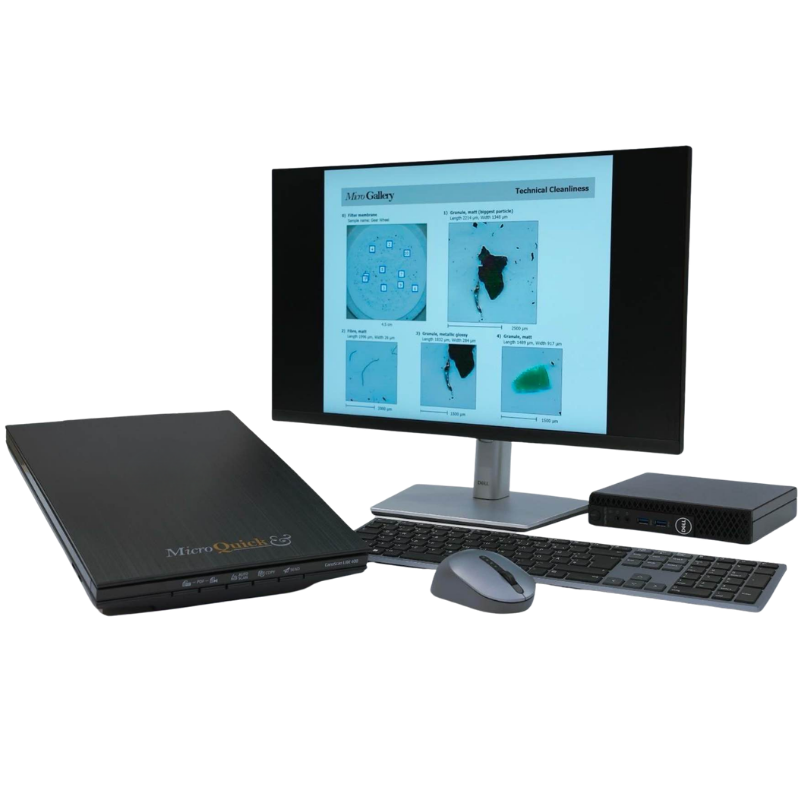
Optical microscopy, the traditional workhorse of cleanliness analysis, cannot determine particle composition. A bright particle under an optical microscope could be a hard silica grain, a reflective metal chip, or a piece of ceramic — the optical appearance alone is ambiguous. This limitation means that optical methods cannot reliably identify the most dangerous particles or provide the compositional data needed for contamination source investigation.
The SEM-EDS Advantage
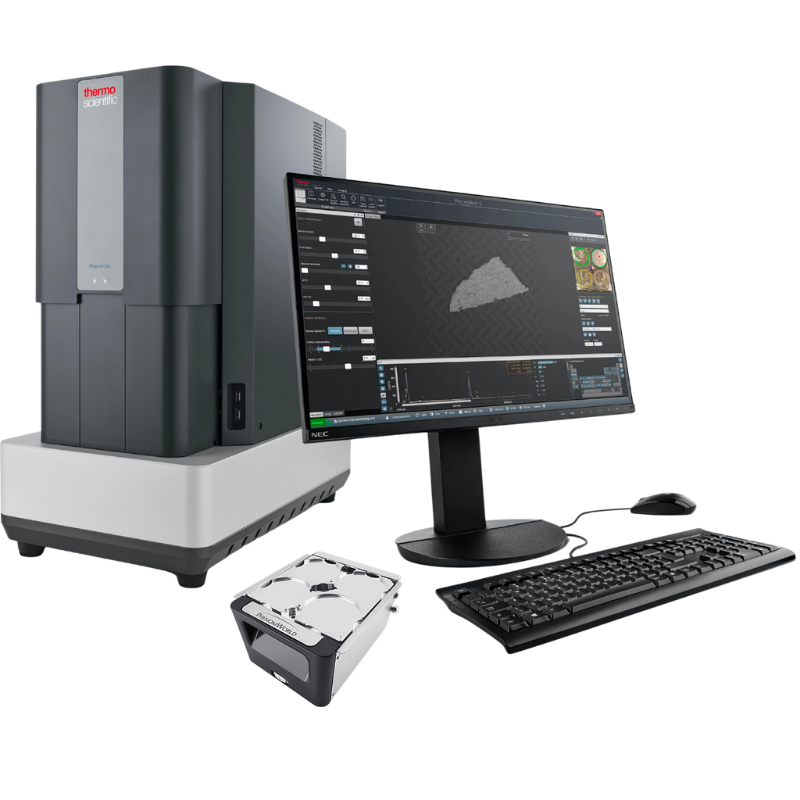
SEM-EDS analysis provides both the morphological data of optical microscopy and the elemental composition data needed to identify hard particles unambiguously. By combining automated particle scanning with EDS compositional analysis, systems like Particle AC enable the automotive industry to move beyond simple particle counting to evidence-based contamination control and source elimination.