
Automotive Cleanliness Control
Cleanliness generally refers to the degree to which automotive components, assemblies, and complete systems are contaminated by particulate matter. It is characterized by parameters such as the mass, size, shape, quantity, and material type of particles collected from specific components using standardized methods. The choice of analytical methods and metrics depends on the degree to which different particles affect component performance and the required precision of cleanliness control.
The Automotive Cleanliness Solution
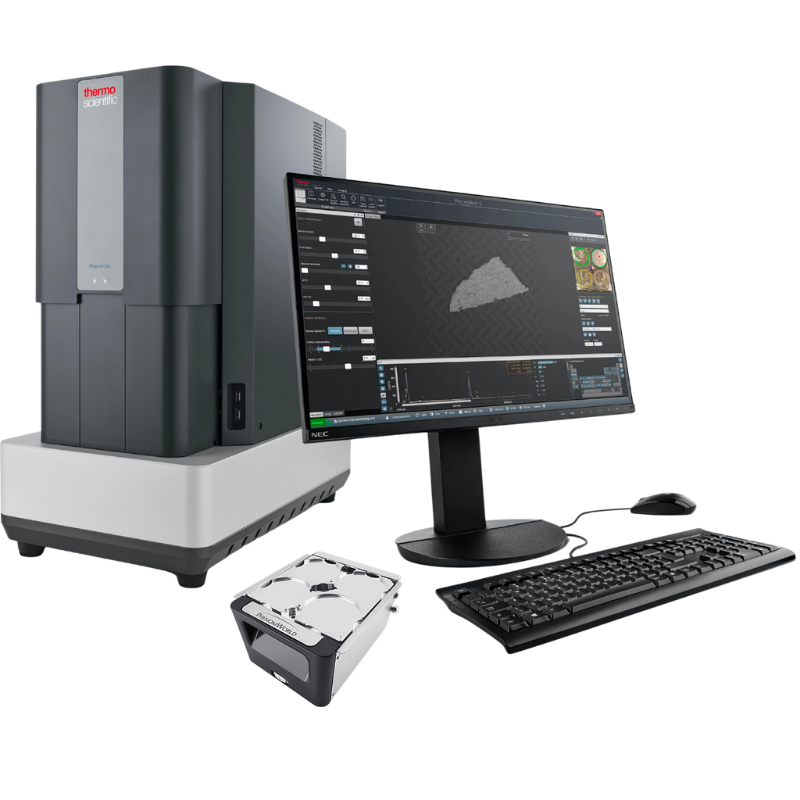
PART 1 — Phenom Fully Automated Automotive Cleanliness Analysis (Particle AC)
Traditional cleanliness analysis methods (gravimetric and optical microscopy) can only provide gross weight or shape information about large dust particles and debris on cleaned components, without identifying the exact type of contaminants. For example, hard particles such as SiO₂ and Al₂O₃ cannot be distinguished from softer organic residues — yet it is precisely these hard particles that pose the greatest risk of abrasive wear and premature component failure.
Particle AC, based on SEM+EDS integrated technology, addresses this fundamental gap:
- Automated Particle Detection: Scans the entire filtration membrane and identifies all particles using BSE contrast.
- Morphological Analysis: Records size, shape, and position data for each particle.
- EDS Elemental Analysis: Determines the elemental composition of each particle, enabling clear classification — metal wear debris (Fe, Al, Cu), hard abrasive particles (SiO₂, Al₂O₃), fibers, organic residues, etc.
- Automated Classification and Reporting: Generates VDA 19.1 / ISO 16232-compliant reports with comprehensive statistics.
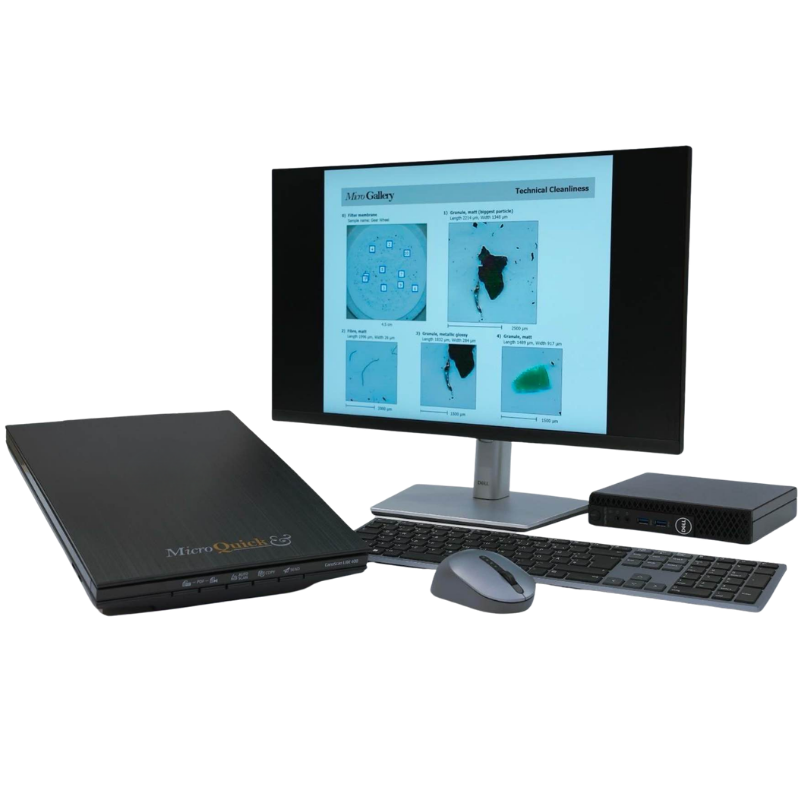
PART 2 — Ultra-Fast Particle Scanner (Micro Quick)
For high-throughput cleanliness inspection scenarios, Micro Quick provides rapid particle counting and sizing based on automated optical scanning technology. Validated by VDA 19.1 and ISO 16232 working groups through proficiency testing, this technology has been approved for standardized cleanliness inspection. It is particularly suited for production-line monitoring and routine quality checks where speed is paramount.
PART 3 — Industry Adoption
Leading automotive manufacturers, including BMW, Mercedes-Benz, and their tier-1 suppliers, have adopted these automated cleanliness analysis methods as integral components of their quality management systems. The shift from traditional gravimetric and optical methods to SEM-EDS-based automated analysis represents a fundamental advancement in the industry's ability to ensure component reliability through evidence-based cleanliness control.