
The critical properties of steel — fatigue life, toughness, and resistance to hydrogen embrittlement — are often governed by its largest defect: non-metallic inclusions. A single sufficiently large inclusion can become the origin of early fatigue crack initiation.
During steelmaking, processes such as deoxidation, refining, and casting inevitably produce non-metallic inclusions including oxides and sulfides. While finely dispersed small inclusions have limited impact on steel properties, large inclusions are the dominant factor determining whether a component will fail prematurely in service.
Extreme Value Analysis: Predicting the Maximum Inclusion
Traditional inclusion rating methods (e.g., ASTM E45, GB/T 10561) assess the "average" or "worst-field" inclusion population observed on a polished cross-section. However, these methods cannot reliably predict the size of the largest inclusion likely to be present in a given volume of steel — and it is precisely this largest inclusion that determines the lower bound of component reliability.
Extreme Value Analysis (EVA), based on the statistical theory of extreme values (Gumbel distribution), provides a methodology for predicting the maximum inclusion size expected in a specified volume of material. The approach involves:
1. Systematic Measurement: The largest inclusion in each of a number of standardized inspection areas is measured.
2. Statistical Modeling: The measured maxima are fitted to a Gumbel extreme value distribution.
3. Prediction: The model is used to predict the maximum inclusion size expected in the full component volume, enabling quantitative risk assessment.
The Role of Automated SEM-EDS Analysis
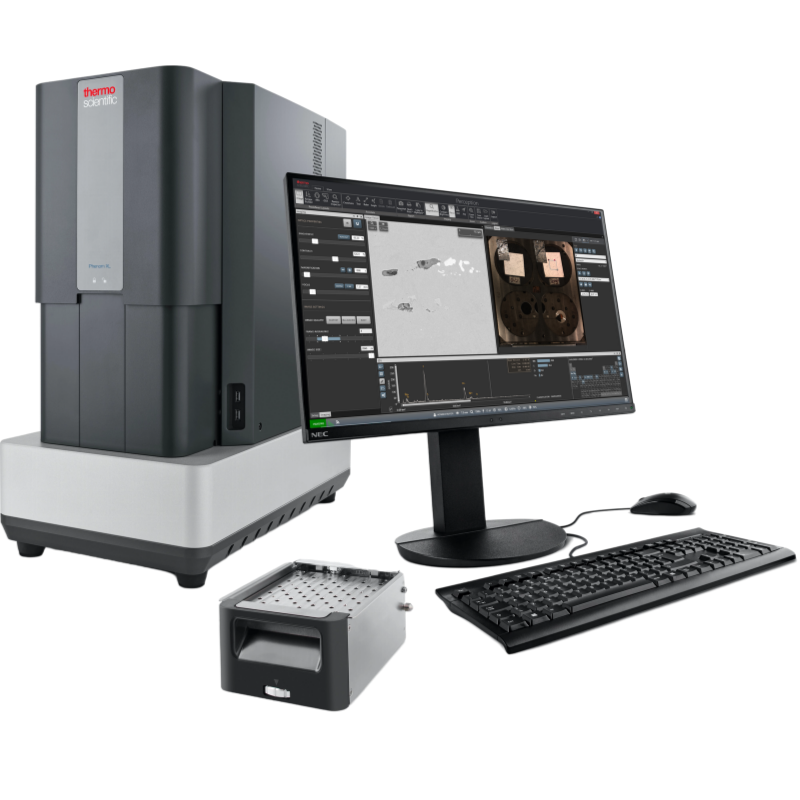
ParticleX Steel enables the practical application of EVA in industrial settings by automatically measuring tens to hundreds of thousands of inclusions, providing the statistically robust dataset required for reliable extreme value prediction. The combination of automated high-throughput measurement with extreme value statistics gives steel producers and end-users a powerful tool for predicting component reliability and establishing evidence-based quality specifications.